Day to day
When cooking has become the hard part of the day

Families often notice the fridge before they notice anything else. The same items, bought and not eaten. Bread going over. A freezer full of meals nobody is defrosting. It is easy to read that as a loss of appetite, and it usually is not.
Cooking is not one task
Making a meal means deciding what to have, having the ingredients, carrying them, standing at a counter for a stretch, managing a hot pan, then clearing up afterwards. Any one of those becoming difficult is enough to make the whole thing not worth starting, and toast is always easier.
That is why the answer is rarely a reminder to eat more. The part that has broken down is usually one specific link in a chain, and the rest still works fine.
Cooking with someone, not for them
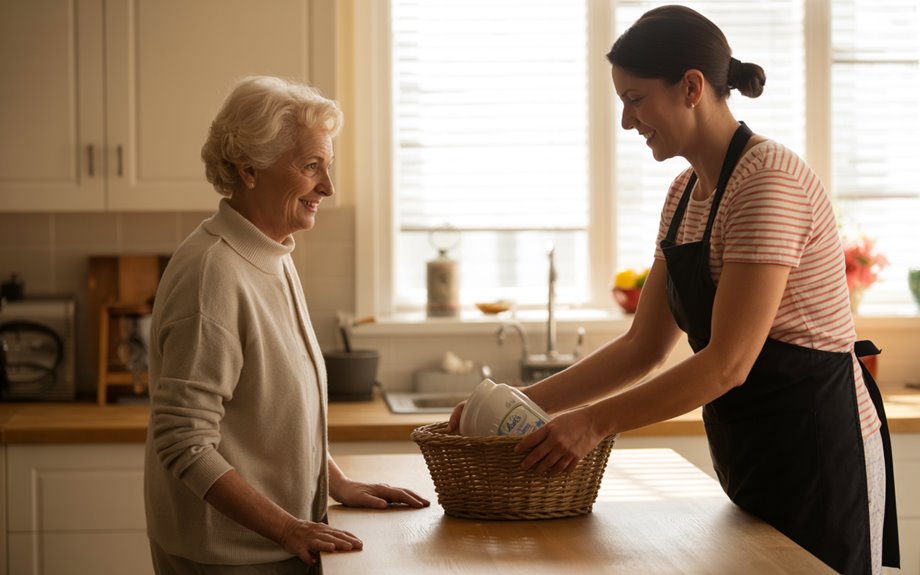
Where someone still wants to cook, the useful help is the part that has become hard — reaching things down, carrying the pan, doing the standing. Someone who has cooked for a household their whole life does not necessarily want to be cooked for. They want the job to be possible again.
Where someone would rather hand it over entirely, that is equally fine. The point is that it is their call, and it is a question worth asking directly rather than assuming.
Preferences are the whole point
A meal someone actually wants gets eaten. Meals prepared around personal tastes are not a nicety here — they are the difference between food that is made and food that is finished. That includes the unfashionable things: the same lunch every day if that is what is wanted, dinner at half past four, the brand of marmalade that is the correct brand of marmalade.
Dietary needs set by a doctor or dietitian belong to them, not to us — we work to what a household has been told, we do not decide it. If food has become the part of the day that is not working, you can talk it through with us.