Day to day
What companionship actually looks like across a week

Of everything a home care agency offers, companionship is the hardest to justify on paper. Washing and dressing is a task. A meal is a meal. Company is harder to point at, and it is usually the first thing struck off when a family is deciding what they actually need.
It is not filling time
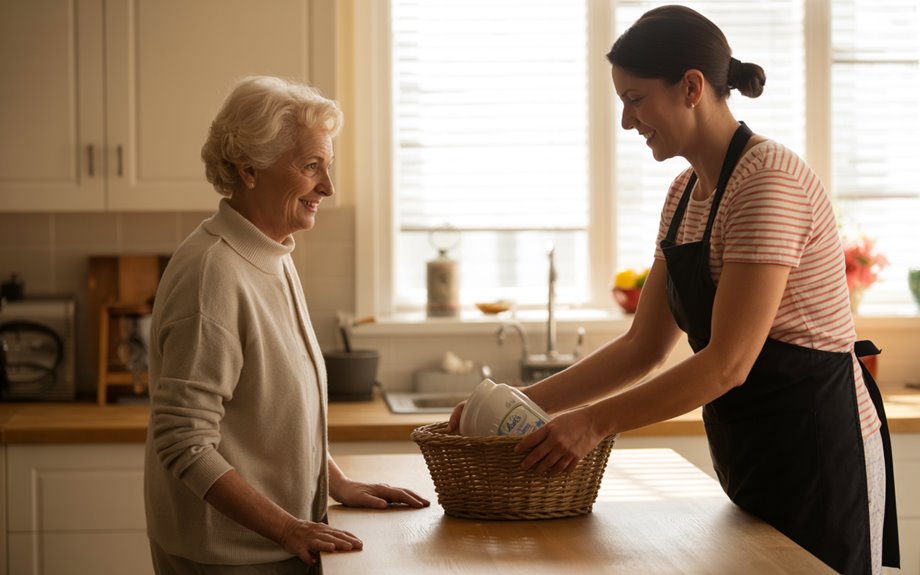
Companionship is not someone sitting in an armchair keeping half an eye on things. It is conversation, shared activities and a familiar presence through the day — and in practice most of it happens alongside something else. Talking while the kettle boils. Going through the post together. Being asked about a photograph on the shelf and answering properly.
The work is in the attention, not the hours. A caregiver who knows which grandchild is which, and asks about the right one, is doing something a stranger cannot do at any length.
A week has a shape
Company that arrives at the same times each week does something that occasional visits do not: it gives the week a structure. There is a day the shopping gets done, a morning someone comes, an afternoon that is reliably not empty.
For someone whose days have started running together, that shape is often what is missing more than any single task. It is also what makes it easier to notice when something has changed, because there is a normal to compare against.
It is not a substitute for family
Families sometimes worry that arranging companionship is admitting they are not visiting enough. It is usually the opposite. When someone else handles the practical part of the week, the visits families do make stop being about the washing and the shopping, and go back to being visits.
Companionship sits alongside the other kinds of support rather than replacing them, and most households combine it with something practical. You can see how the different kinds of support fit together, or talk to us about what a week might look like.